Now serving NYC · NJ · CT Mon–Fri · 8:00am – 5:00pm 100 Park Ave, New York, NY 10017

A close-up of a marble surface featuring a mix of beige, cream, and light grey tones with white and darker grey veins running diagonally, showcasing the results of expert marble restoration New York City.

Bring Back the Shine You Thought Was Gone

Marble Restoration Service New York City

Dull floors, etched countertops, scratches that won't buff out—cleaning isn't fixing it. Professional marble restoration service in New York City removes the damaged layer of stone and restores the clarity and shine your marble had when it was new.

The NYC Marble Care Difference

Why Your Marble Needs Real Specialists

01

Trained Stone Craftsmen Only

No cleaning crews using harsh chemicals. Your marble gets handled by skilled technicians trained in proper restoration techniques that protect the stone.

02

Professional Grade Equipment

Diamond abrasives, wet-sanding systems, and precision tools designed specifically for marble—not generic cleaning machines that can cause more damage.

03

Complete Restoration Process

Grinding, honing, polishing, and sealing in one comprehensive service. You get uniform results that blend seamlessly, not visible repair patches.

04

Long-Term Protection Included

High-quality sealers that defend against future etching and staining. Your restored marble stays protected, not just polished for a few weeks.

A wide hallway with a shiny tiled floor, lined with wooden benches and brick walls on both sides. Expert natural stone restoration New York City gives the area its bright, polished look, making the space appear empty and inviting.

Restoration That Actually Fixes the Problem

Marble Care Service in New York City

There's a difference between cleaning marble and restoring it. Cleaning removes surface dirt. Marble restoration service in New York City removes the damaged layer of stone to reveal the pristine surface underneath, then polishes it to the finish you want. That's why restoration works when everything else fails.

Your marble isn't dirty—it's damaged. Etching from acidic spills, scratches from grit and traffic, dullness from years of wear. These aren't problems you can wipe away. They require the right tools, the right techniques, and craftsmen who understand how marble actually behaves. That's what separates real marble care service in New York City from companies that just clean floors.

What Changes When It's Done Right

Marble Polishing in New York City

Professional marble polishing in New York City doesn't just make your floors shinier—it removes years of damage and gives you surfaces that actually look cared for.

01Your marble looks like it did when first installed—clear, smooth, and reflective without cloudy etch marks or uneven dull spots.
02Scratches from grit and traffic disappear completely through proper honing, not temporarily hidden under wax that wears off in weeks.
03Wine spills and lemon juice don't send you into panic mode because proper sealing gives you time to wipe before damage sets in.
04Guests notice your floors and countertops for the right reasons—elegance and shine, not dullness and neglect.
05You skip the nightmare of tearing out and replacing marble that just needed proper marble repair and restoration in New York City.
06Entryways, kitchens, and bathrooms maintain their value instead of broadcasting years of wear to everyone who walks through.

Spacious, empty room with white walls, large windows, and shiny marble tile flooring. Natural light fills the minimalist space, showcasing expert marble restoration New York City for a bright and modern atmosphere.

Why Marble Fails (And How We Fix It)

Marble Repair and Restoration in New York City

Marble is calcium carbonate. That means acids dissolve it. Lemon juice, wine, vinegar, coffee, tomato sauce, even some bathroom cleaners—they all eat away at the polished surface, leaving dull, cloudy spots called etching. You can't clean etching away because it's not dirt. It's chemical damage to the stone itself. That's where marble repair and restoration in New York City comes in.

Then there's the grit. New York City winters track in sand and salt. Every step grinds microscopic scratches into your marble. Over time, those scratches build up until your once-glossy floors look hazy and worn. Add in hard water deposits, improper cleaning products that leave filmy residue, and years of foot traffic, and you end up with marble that's lost all its clarity and shine.

Marble floor restoration in New York City fixes this by removing that damaged layer. We use diamond abrasives in progressively finer grits—starting coarse to eliminate deep scratches and etching, then moving to finer grits that smooth and refine the surface. The final polishing step brings back the mirror-like finish. Then we seal it properly so future spills don't penetrate as quickly. You get time to wipe things up before they cause permanent damage.

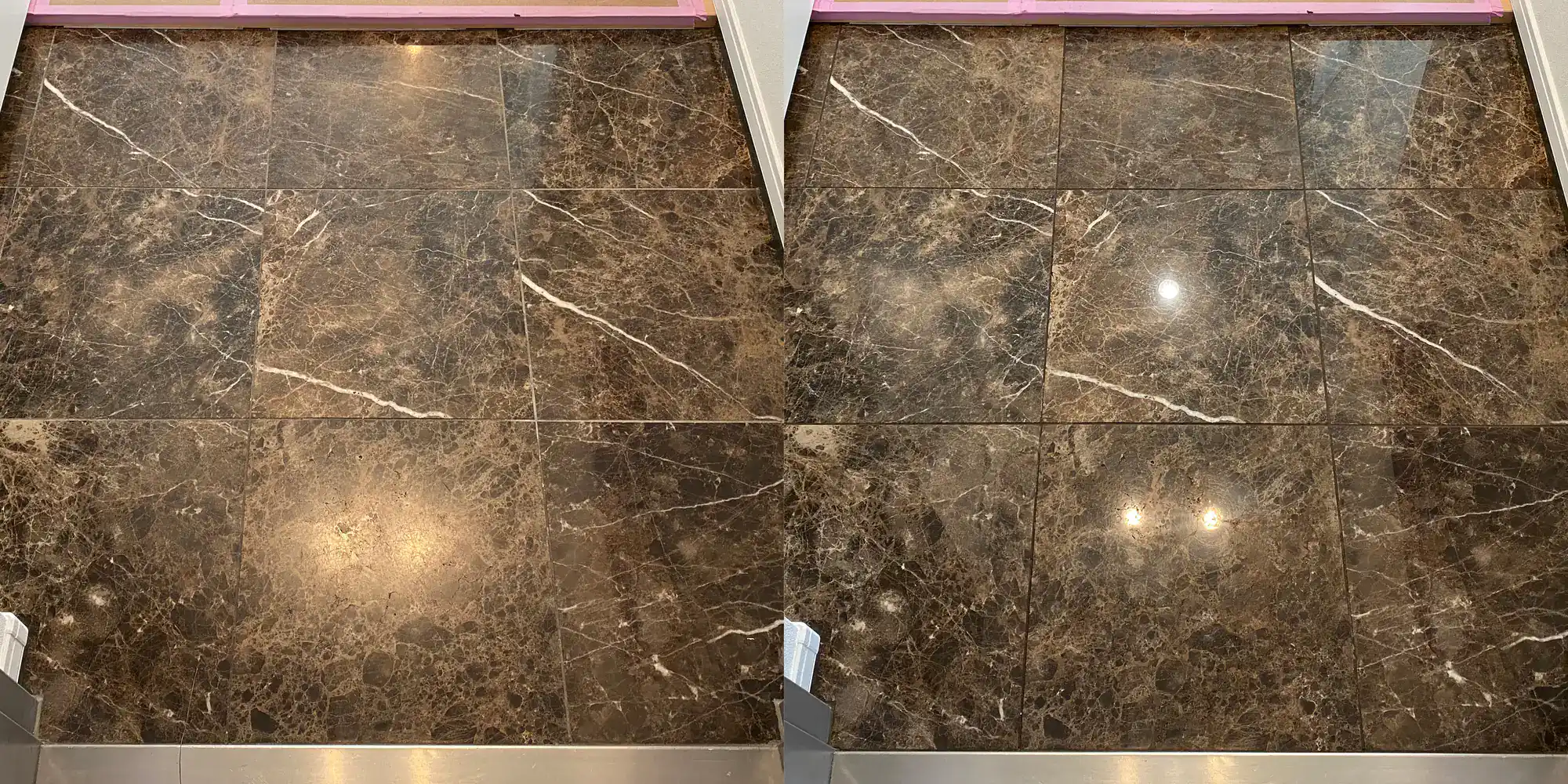
Side-by-side comparison of marble floor tiles, showcasing the dramatic results of marble restoration New York City: the left side looks dull and scratched, while the right shines brightly, smooth and freshly polished under overhead lights.

What's Actually Included in Real Restoration

Marble Cleaning and Restoration in New York City

Surface cleaning comes first—removing dirt, grime, and any old wax or coating buildup that's making your marble look worse. This isn't the restoration part. It's preparation so we can see what we're actually dealing with during marble cleaning and restoration in New York City.

Next is grinding and honing. If your marble has deep scratches, uneven tiles, or heavy etching, we grind down to a level surface using metal-bonded diamond abrasives. This removes the damage completely. Honing follows with finer abrasives to smooth everything out and prepare for polishing. You can stop here if you want a matte, non-reflective finish that hides minor wear better than high-gloss.

Polishing is where the shine comes back. We work through multiple diamond grit levels—sometimes up to 8500 grit for maximum gloss. This isn't a coating. We're literally refining the stone's surface until it reflects light like glass. Then comes sealing with professional-grade products that penetrate the marble and create a barrier against stains and moisture. Some sealers even protect against etching, which standard sealers don't do. Finally, we handle grout restoration if needed—cleaning, repairing, or color-sealing grout lines so they don't detract from your newly restored marble.

How We Bring Your Marble Back to Life

Marble Polishing Near You in New York City

Surface Assessment and Preparation

We inspect your marble to identify etching, stains, scratches, and wear patterns, then deep-clean to remove all surface contamination before restoration begins.

Grinding, Honing, and Polishing

Diamond abrasives remove damaged stone layers, smooth the surface, and restore your preferred finish—from matte honed to mirror-like high-gloss.

Sealing and Protection

Professional-grade sealers protect against future staining and etching. Your marble stays beautiful longer and gives you time to clean spills before damage occurs.

FAQ

Frequently Asked Questions

How is marble restoration different from regular cleaning in New York City?
Cleaning removes surface dirt and grime. Restoration removes the damaged layer of marble itself to reveal fresh, undamaged stone underneath. When your marble is etched, scratched, or dull, cleaning won't fix it because the problem isn't dirt—it's actual damage to the stone's surface. Marble restoration service in New York City uses diamond abrasives to grind away that damaged layer, then hones and polishes the stone to restore its original finish. We're not covering up problems with wax or coatings. We're physically removing the damage and refinishing the marble. That's why restoration lasts and cleaning doesn't when you're dealing with etching, scratches, or years of wear.
What causes those dull, cloudy spots on my marble countertops and floors?
Those are etch marks, and they happen when acidic substances react with marble's calcium carbonate composition. Lemon juice, wine, vinegar, coffee, tomato sauce, and many household cleaners all contain acids that dissolve the polished surface of your marble. The result is a dull, cloudy spot that feels slightly rough compared to the surrounding polished area. Etching isn't a stain—it's chemical damage to the stone itself, which is why wiping or cleaning doesn't remove it. You need marble polishing in New York City to physically refinish those etched areas and blend them back into the surrounding surface. After restoration, proper sealing helps slow down future etching by giving you more time to wipe up acidic spills before they damage the stone.
Can you fix scratches on marble floors without replacing the entire floor?
Yes. Most scratches can be completely removed through honing and polishing, even deep ones. The process involves using progressively finer diamond abrasives to grind down the scratched surface until it's smooth and level, then polishing it back to your desired finish. Minor scratches might only need light honing and polishing. Deeper scratches require more aggressive grinding first. The key is blending the repaired area into the surrounding marble so you don't see a visible patch. Marble floor restoration in New York City costs a fraction of replacement, and when it's done properly by skilled technicians, you can't tell where the scratches used to be. The restored area matches the rest of your floor in both color and finish.
How long does professional marble restoration last in high-traffic areas?
That depends on traffic levels, maintenance habits, and whether you're protecting the marble properly after restoration. In residential settings with normal use, professionally restored and sealed marble can maintain its finish for years before needing another full restoration. High-traffic commercial spaces like hotel lobbies or office entryways will show wear faster and might need periodic maintenance polishing between full restorations. The biggest factor is what you're doing to the marble daily. If you're using proper pH-neutral cleaners, wiping up acidic spills quickly, and keeping grit swept off the floors, your restoration lasts much longer. If you're letting sand grind into the surface or using harsh cleaners, you'll wear through the finish faster. Proper marble care service in New York City includes sealing that extends the life of your restoration by protecting against staining.
What's the difference between honed and polished marble finishes?
Polished marble has a high-gloss, mirror-like finish that reflects light and shows off the stone's natural veining and color depth. It's the classic elegant look most people think of when they picture marble. Honed marble has a matte, satin finish with little to no shine. It feels smooth but doesn't reflect light the same way. Honed finishes are more forgiving—scratches and etch marks are less visible because the surface is already non-reflective. Many people choose honed finishes for high-traffic areas or busy kitchens where daily wear would be more obvious on polished marble. During marble restoration near you in New York City, you can choose which finish you want. You're not stuck with whatever you had before. We can change a polished floor to honed or vice versa, depending on your preference and how you use the space.
Will sealing my marble prevent etching and staining completely?
Standard sealers help with staining but don't prevent etching. Here's why: sealers penetrate the marble's pores and create a barrier that slows down liquid absorption. This gives you more time to wipe up spills before they penetrate and stain the stone. But etching is different—it's a chemical reaction between acid and the marble's surface. Standard sealers don't stop that reaction. However, there are advanced anti-etch coatings that do create a physical barrier on the marble's surface to block acidic substances from reaching the stone. These aren't traditional sealers—they're specialized protective treatments. During marble cleaning and restoration in New York City, we can apply the right type of protection based on how you use your marble. Kitchen countertops that see a lot of acidic foods benefit from anti-etch protection. Floors might only need standard sealing for stain resistance.